
How the New Oman-UAE Railway Line Will Create New Opportunities for Logistics Founders
Are you waiting for the railway to open before planning your next business move? By then, you may find suitable licences, sites, partners, and customer contracts harder to secure. Early entrants may also gain better access to warehouse locations, transport links, and local suppliers.
Meanwhile, businesses that delay may face higher setup costs and stronger competition. You need an early plan that controls cost and limits delays. Here, we explain the commercial case and how we at Jitendra Consulting Group can support your setup.
Why the Oman-UAE Railway Is a Turning Point for Cross-Border Trade
The Oman-UAE Railway for Logistics can change how companies plan regional delivery, storage, and sourcing. It may reduce dependence on long road-only routes and create steadier freight schedules. As a result, Cross-Border Trade Between Oman and the UAE may become easier for manufacturers, wholesalers, and distributors.
The larger benefit will come from better links between ports, industrial areas, warehouses, and inland markets. Therefore, businesses that prepare early may secure better commercial locations and supplier agreements before demand rises.
What the Railway Means for Logistics Companies, Importers, and Exporters
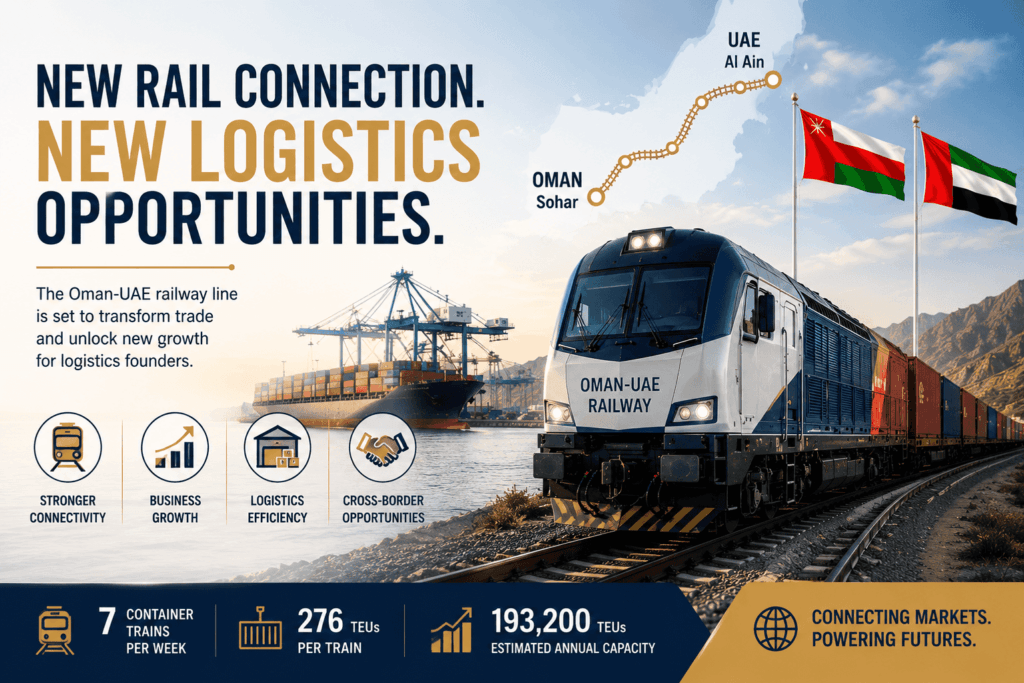
The planned service includes 7 container trains every week, with each train carrying 276 TEUs. Estimated annual capacity is 193,200 TEUs. This volume gives SMEs and larger companies a strong reason to review Cargo Movement Across Oman-UAE before operations begin.
However, rail will not remove the need for road transport. Businesses will still require trucking, customs support, container handling, warehouse services, and final delivery. Therefore, founders should study how their services can connect different parts of the supply chain.
Industries Expected to Benefit First from the Oman-UAE Rail Corridor
Manufacturing, food distribution, pharmaceuticals, construction materials, and general trading may benefit first. These sectors depend on regular supplies, stable delivery periods, and controlled inventory costs.
The Future Logistics Hub in Oman-UAE may also attract firms that manage temperature-controlled goods, industrial materials, and regional distribution. Meanwhile, the Oman-UAE Railway for Logistics may create work for freight agents, warehouse operators, equipment suppliers, and companies serving factories, ports, and free-zone customers.
Why Founders Should Establish Their Business Before Rail Operations Begin
The route covers 238 km and passes through Sohar, Al Buraimi, Wadi Al Jizzi, and Al Ain before joining the UAE network. These locations may attract stronger demand for warehouses, transport yards, offices, and support services.
Early company formation gives founders more time to compare sites, build supplier relations, and approach possible customers. It also allows businesses to prepare for Cross-Border Trade Between Oman and the UAE without making rushed decisions near the opening date.
Key Business Setup Considerations for Logistics and Trade Companies in Oman
Before registration, founders should match the licensed activity with the actual business model. A freight broker, warehouse operator, importer, and transport company may need different approvals. Therefore, investors should review several points before committing funds:
- Select activities that cover current services and future expansion.
- Check whether the chosen premises allow storage or transport work.
- Plan tax, customs, and corporate banking requirements early.
- Review insurance and sector approvals before signing contracts.
These checks can prevent expensive licence changes after registration.
How Early Company Formation Can Support Long-Term Expansion Plans
An early setup gives a company time to test demand before larger freight volumes arrive. A business can begin with trading, local delivery, supplier coordination, or advisory work. Later, it may expand into warehousing, consolidation, or regional distribution.
This phased model reduces pressure on working capital. In addition, it helps companies prepare for Cargo Movement Across Oman-UAE and develop a commercial position around the Future Logistics Hub in Oman-UAE before competition increases.
Regulatory and Licensing Factors to Plan Before the Railway Opens
Founders should not assume that one commercial licence covers every logistics service. Customs brokerage, road transport, warehousing, food handling, and pharmaceutical storage can involve separate conditions and approvals.
There is no official programme formally called “The 7-Day Launch”. However, companies may complete fast-track formation within 5 to 7 days when they prepare documents, activities, and approval requests in advance. This preparation also supports Oman-UAE Economic Connectivity and reduces avoidable registration delays.
How Jitendra Business Consultants Helps Logistics and Trade Businesses Establish Operations in Oman
Jitendra Consulting Group helps foreign entrepreneurs, SMEs, and corporate investors select suitable activities, prepare documents, and form the right business structure. We also assist with registration, licensing, banking support, and ongoing compliance needs.
Our role focuses on reducing errors before investment begins. For companies planning around Oman-UAE Economic Connectivity, early professional advice can protect time, capital, and future expansion plans.


 English
  Arabic